

| Contact Us | Directions
|
| Contact Us | Directions |
|
Blue Ridge Center | Nature | Farming | History | Learning from the Land |
|
|
|
History
This rich valley has probably been visited by human beings for more than 10,000 years. Since colonial days, much of the land has been cleared in support of small agrarian communities. The valley also was a strategic corridor for troop movements by both sides during the Civil War, and the land still holds some evidence of their passing. We have not yet conducted an intensive search for evidence of American Indian presence on our land. However, the historical record from the colonial period onward is deep and varied. The most visible historical evidence includes the remains of many structures, varying from sturdy stone houses to remnants of old barns, and chicken coops and sheds. Cleared land, former dams, a network of woods roads, and fields only recently reclaimed by forest, add detail to the farming record. In the 19th century, our valley also was an active north-south transportation route, and the Civil War prompted repeated movements along its length by both armies. These soldiers left their mark on the landscape, though their fleeting impacts are far more difficult to see and read — souvenir scavengers cleared the surrounding area long ago. In the early 20th century, life Between the Hills was rural and agricultural. But after World War II, changes that were shaping the rest of the U.S. — changes in farm economy and large population movements to cities and suburbs — slowly took hold here. While the look is still rural, there are few owner-operated farming operations. However, vineyards and equestrian stables are emerging to keep the land working.
The Blue Ridge Center | Nature | Farming |
History |
Learning from the Land © Copyright 2001-2004, Blue Ridge Center for Environmental Stewardship. |
||||||||||||||||



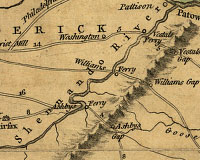 Between the Hills has witnessed roughly 10,000 years of human interaction with the landscape.